

Neither sink style wins outright. A vessel sink vs. an undermount sink decision comes down to how much visual drama you want, how you clean your bathroom, and how your vanity is built. Vessel sinks sit above the counter as a sculptural bowl. Undermount sinks tuck beneath the countertop for a seamless, easy-wipe surface.
Both can look expensive and hold up for years, but they ask different things of you. The right pick depends on your vanity height, your daily routine, and how many people share the space.
What Is a Vessel Sink?
A vessel bathroom sink sits entirely on top of the countertop rather than dropping into it. The bowl is visible from base to rim, so the sink itself becomes part of the room's design rather than something hidden behind a faucet.
Most vessel sinks need a tall faucet and a lower-than-standard vanity to stay comfortable. They come in concrete, stone, glass, and metal, and they read as furniture as much as a fixture. That's why they show up so often in powder rooms and design-forward primary baths.
What Is an Undermount Sink?
An undermount sink mounts beneath the countertop, with the counter's edge forming the sink's rim. There's no lip or gap between the counter and basin, just a clean drop-off into the bowl.
This installation style favors function first. Water, soap, and toothpaste wipe straight off the counter into the sink with one swipe of a cloth, with no ridge to catch grime. Undermount sinks typically pair with solid surfaces like natural stone, quartz, or solid-surface composite, since the countertop material must support the basin from below.
Key Differences Between Vessel and Undermount Sinks
The two styles solve different problems. Vessel sinks lead with presence and treat the bowl as a design object. In contrast, undermount sinks prioritize practicality, allowing the countertop to take on the visual role. How this difference plays out in the details that actually affect daily use.
Style Impact
Vessel sinks create a strong focal point, especially in materials like concrete, stone, or metal that show texture and color. Undermount sinks disappear into the counter on purpose, letting the stone or quartz slab carry the visual weight instead.
Cleaning Needs
Undermount sinks are easier to wipe clean since there's no base or rim to work around. Vessel sinks look sleek but often need a quick wipe at the base where the bowl meets the counter, where water and toothpaste tend to pool.
Installation Complexity
Vessel sinks generally install with a smaller cutout and less precision than undermount sinks require. Undermount installation demands a countertop cutout finished to exact tolerances, since the sink attaches with clips and adhesive from below rather than resting on top. That precision pays off over time.
Danny Niemela, co-owner and CFO of ArDan Construction, noted that integrated setups like undermount sinks earn "bonus points... because they have fewer seals and fewer leaks" compared to exposed-edge sinks.
Comfort and Splashing
Splashing depends more on faucet height and water pressure than on sink type alone. A vessel sink paired with a tall faucet and strong flow can splash more than a shallow undermount basin with a low-set faucet, and the reverse is also true with the wrong pairing. Faucet choice matters here, too.
According to the EPA's WaterSense program, bathroom and kitchen faucets account for close to 30 percent of indoor residential water use nationwide, and WaterSense-labeled faucets cap flow at 1.5 gallons per minute.
A low-flow, well-matched faucet reduces both water waste and splash risk, regardless of the sink style below it.
Counter Space
Vessel sinks sit on top of the counter, taking up usable surface area depending on their footprint and shape. Undermount sinks recess entirely below the countertop line, leaving the full countertop surface free for toiletries, towels, and daily use.
Pros and Cons of Vessel Sinks
Vessel sinks bring style but ask for some planning in return.
Pros:
- Sculptural, gallery-worthy presence that anchors the whole vanity
- Wide range of shapes and materials, from oval bowls to angular basins
- Simple installation with a smaller countertop cutout than undermount sinks need
- Easy to swap for a different shape later without redoing the counter
Cons:
- Needs a taller or wall-mounted faucet, which adds cost
- Requires a lower vanity height to stay comfortable for everyday use
- The base of the bowl can collect water and needs to be wiped regularly.
- Takes up more visible counter space than a recessed basin
Pros and Cons of Undermount Sinks
Undermount sinks trade some visual drama for everyday ease.
Pros:
- Effortless countertop wiping with no rim to work around
- Subtle, integrated look that lets the countertop material lead
- Standard faucet heights work without special hardware or extra cost
- Fewer seals and points of failure over the long run
Cons:
- Installation requires precise countertop fabrication and cutout work.
- Limited to countertop materials that support underside mounting
- Adhesives and seals need occasional inspection to prevent leaks.
- Harder and pricier to swap for a different sink shape later
How to Choose the Right Sink for Your Vanity

The right sink depends less on trends and more on how your bathroom is actually used every day.
Vanity Height
Standard vanities run 32 to 36 inches tall. Vessel sinks add height on top of that, so they work best with a lower cabinet base to keep the final sink height comfortable for the people actually washing their hands.
Bathroom Size
Powder rooms and guest baths, used briefly and infrequently, can handle the extra visual weight and upkeep of a vessel sink without it becoming a daily hassle. Primary bathrooms used multiple times a day favor the low-maintenance undermount setup instead.
Picture a powder room off the entryway versus a primary bath shared by two people getting ready each morning. The powder room can feature a striking vessel sink that serves as a conversation piece. The primary bath benefits more from an undermount basin that wipes clean between two people's routines with minimal effort.
Daily Users
Households with kids or multiple daily users benefit from the easier cleaning and standard faucet height of an undermount sink. A single-user guest bath has more room to prioritize style over convenience, since the upkeep falls on fewer hands.
Design Style
Design-led spaces often lean into a vessel sink's sculptural options, whether that's rectangular vessel sinks with crisp architectural lines or egg vessel sinks with a rounded, organic profile. A primary bathroom designed for daily use usually benefits from the quiet, consistent performance of an undermount basin.
Conclusion
There's no universal winner between a vessel sink and an undermount sink. Pick the vessel sink for a powder room or a design statement piece. Pick the undermount sink for a high-traffic bathroom that needs to wipe clean fast and hold up to daily use.
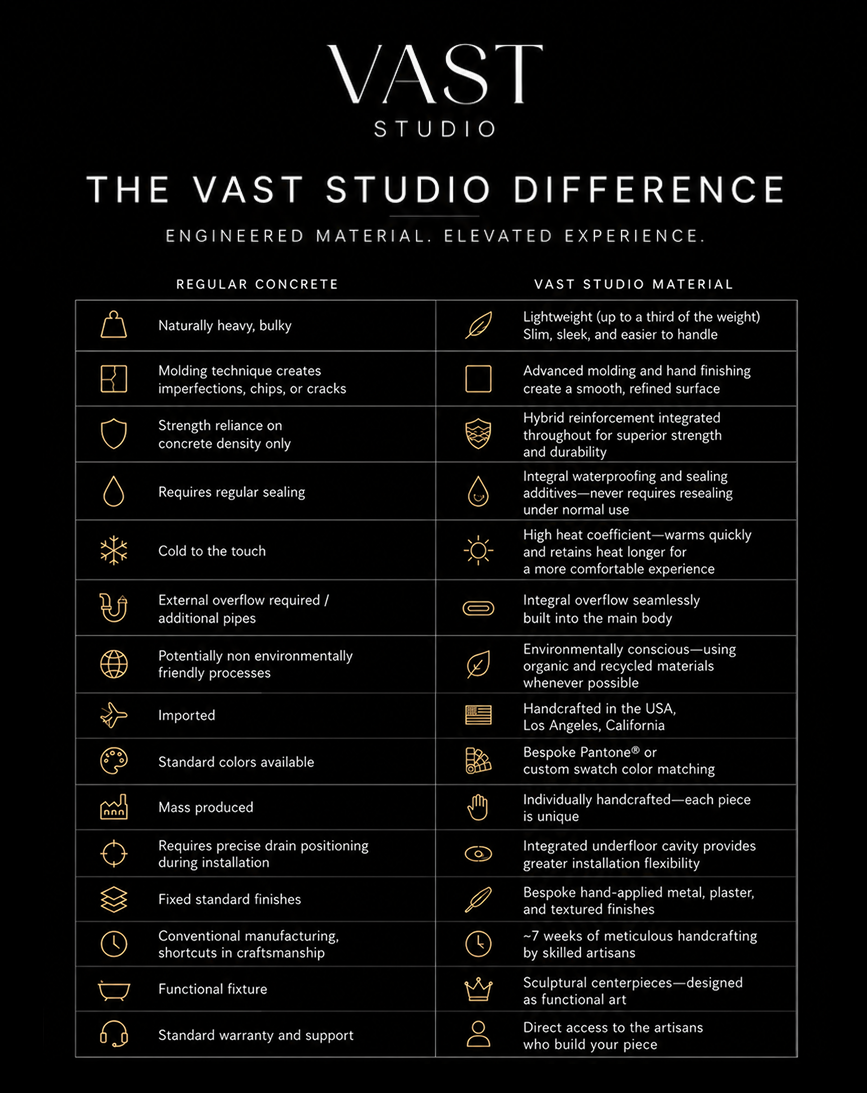
Match the sink to your vanity height, your household, and the level of upkeep you're willing to do. If you're browsing options,Vast Studio's hand-cast collection of luxury sinks offers both styles in concrete finishes built to hold up to daily use.
Frequently Asked Questions
Here are some answers to the common questions that will help you better understand this comparison.
Are vessel sinks outdated?
No, vessel sinks are still current when paired with refined materials, a proportionate vanity, and a modern faucet. They remain a common choice in design-led powder rooms and primary baths built around a strong focal point.
Which is easier to clean, a vessel or an undermount
Undermount sinks are usually easier to wipe clean because the countertop flows straight into the basin, with no rim to work around. Vessel sinks may need occasional cleaning around the base where the bowl meets the counter.
Do vessel sinks splash more than undermount sinks?
Splashing depends more on basin shape, faucet height, faucet angle, and water pressure than on sink type alone. A well-matched faucet helps prevent splashing, regardless of the sink style you choose for your vanity.
Can an undermount sink be used with any countertop?
No, undermount sinks typically require a compatible countertop material, such as stone or quartz, along with a properly finished cutout underneath. Laminate and some engineered materials aren't suited for underside mounting.

Vast Studio creates lightweight, eco-friendly concrete bathtubs combining artistic design, heat retention, durability, and customization options.
13926 Saticoy Street, Panorama City, CA 9140
- Choosing a selection results in a full page refresh.
- Opens in a new window.
Net Orders Checkout
| Item | Price | Qty | Total | |
|---|---|---|---|---|
| Subtotal |
$0.00 |
|||
| Shipping | ||||
| Total | ||||