

When choosing between the many types of bathroom sinks, there are four main factors to consider: how it mounts. What shape does the basin take? What it's made of. And how much room does your bathroom actually have to give?
Get those four right, and the rest of the decision practically makes itself. This guide walks through common styles, the materials worth considering, and how to match a sink to your space rather than just your Pinterest board.
What to Know Before Choosing a Bathroom Sink
Function comes before finish. Before you fall for a shape, check that it fits your vanity, your plumbing, and how the bathroom actually gets used day to day.
Four categories drive nearly every sink decision: mounting style, basin shape, material, and the size of the room itself. A sink that looks perfect in a photo can still be wrong for a small guest bath or for a primary bathroom that two people share every morning.
Layout compatibility matters as much as looks. A vanity built for a drop-in sink usually can't take an undermount without new countertop work. So check compatibility first before you fall too hard for a style you saw online.
Common Types of Bathroom Sinks
Each sink style solves a different problem, from tight powder rooms to design-forward primary baths. Here's a quick breakdown of where each one actually works best.
Undermount Sinks
Undermount sinks mount beneath the countertop, leaving a smooth, unbroken surface with no rim to catch grime. They're the sleekest, easiest-to-clean option here. The tradeoff? They need a countertop material that can support the basin from below.
Drop-In Sinks
Drop-in sinks rest in a cutout with a visible rim sitting above the counter. Budget-friendly. Forgiving of imperfect cuts. Simple enough that plenty of DIYers handle the install themselves.
Vessel Sinks
A vessel bathroom sink sits entirely on top of the counter as a self-contained bowl, turning the sink itself into a design statement. This above-counter style suits designer bathrooms and powder rooms far more than a busy family bath.
Wall-Mounted Sinks
Wall-mounted sinks attach directly to the wall, with no cabinet below, freeing up floor space in tight bathrooms—a great choice for minimalist layouts and small powder rooms.
Pedestal Sinks
A pedestal sink stands on a decorative base that hides the plumbing while keeping the footprint slim. Classic, simple, and best suited to powder rooms and traditional bathrooms where storage isn't the priority.
Console Sinks
Console sinks blend a pedestal's open, airy look with a vanity's usable surface, resting on exposed legs with a countertop overhang. They give you visual lightness without giving up all your counter space.
Integrated Sinks
An integrated sink and countertop are formed as a single continuous piece, with no seam between the basin and the surface. You'll see this construction a lot in modern bathrooms built for effortless cleaning and long-term durability.
That durability isn't just a talking point either. In a recent interview, contractor Danny Niemela, co-owner and CFO of ArDan Construction, said integrated setups earn "bonus points... because they have fewer seals and fewer leaks" compared to sinks with exposed edges.
Picture a sculptural vessel sink in a luxury primary bath, then picture a slim wall-mounted sink in the powder room down the hall. Both are the right choice. This option is for entirely different rooms and entirely different daily demands.
Bathroom Sink Materials to Consider
Material affects durability, upkeep, and how the sink looks daily, as much as its shape does. Here's how the most common options stack up.
- Porcelain and vitreous china: The most common bathroom sink materials, prized for their glossy, non-porous finishes that resist stains and wipe clean with mild cleaners. They can chip, though, if a heavy object drops into the bowl.
- Stone: Natural stone gives a unique look and substantial weight to a vanity. Most stone needs periodic sealing to resist staining, so factor that in.
- Glass: Glass basins add striking color and shape. They show water spots quickly, making them a better fit for lower-traffic bathrooms.
- Metal: Copper and stainless steel resist cracking and chipping entirely. Copper even develops a natural patina over the years of use, which some homeowners love, and others don't.
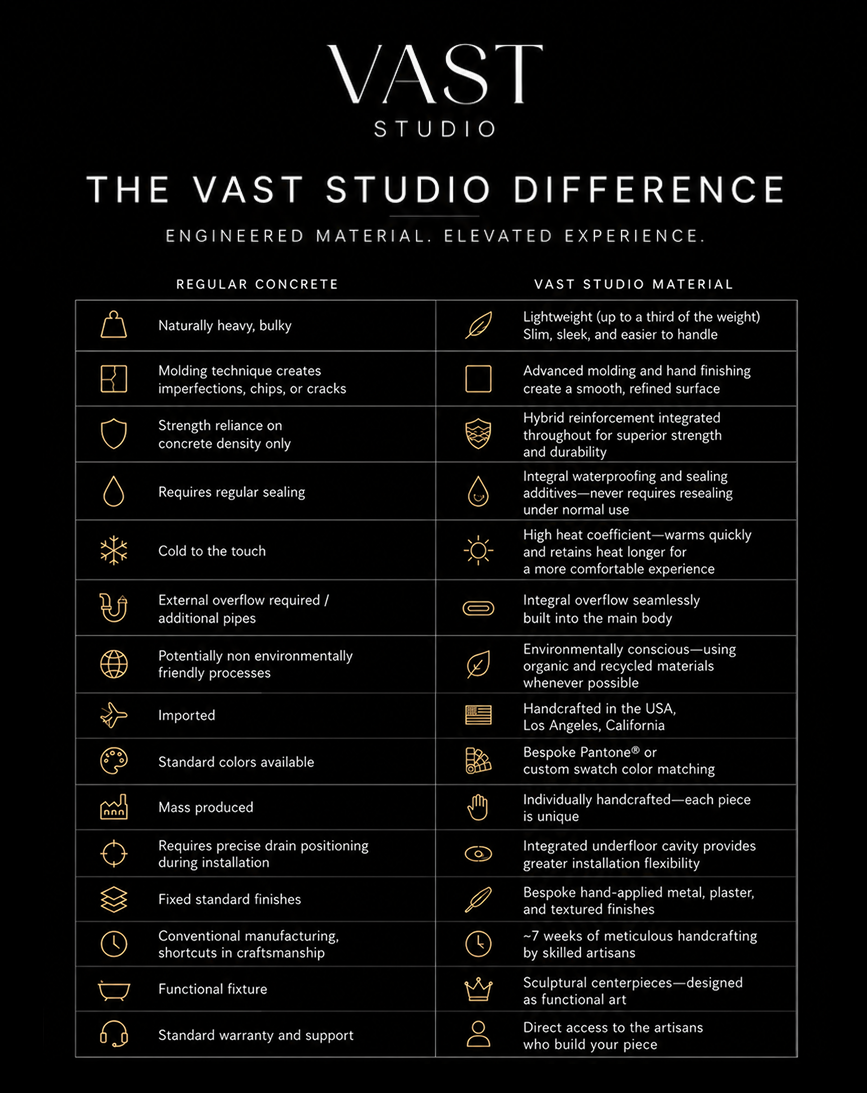
- Concrete: Concrete sinks bring an architectural, sculptural presence that porcelain and vitreous china just can't match, especially when custom color-matched to the rest of the room. Vast Studio's concrete sinks are hand-cast in this material for exactly that reason.
Porcelain remains the most common choice mainly because it balances cost, durability, and cleaning ease better than almost anything else on this list. If you're after a bathroom sink luxury upgrade instead, concrete and natural stone offer a level of custom color and texture that mass-produced porcelain simply can't replicate.
How to Choose the Right Sink for Your Bathroom Size
Size the sink to the room, not the other way around. A powder room, a guest bathroom, and a primary bathroom each place different demands on clearance, counter space, and storage.
Federal accessibility guidance from the U.S. Access Board sets a maximum sink height of 34 inches, with a minimum of 27 inches of knee clearance beneath the sink for accessible design. Even outside strict compliance projects, those numbers make a genuinely useful baseline for everyday comfort.
Powder rooms and guest baths can afford to prioritize a striking pedestal or vessel sink, since they are used briefly and infrequently. Primary bathrooms shared by multiple people tend to benefit more from a wider vanity, ample counter space, and an easy-clean undermount or integrated basin.
Faucet placement depends on sink choice, too. Vessel sinks typically need a taller faucet and extra clearance behind the basin. Wall-mounted and pedestal sinks, meanwhile, require exposed plumbing to be routed and finished cleanly.
Features to Look for When Comparing Bathroom Sink Types
Looks alone won't tell you whether a sink will hold up to daily life. Weigh these practical features before you settle on a style.
- Faucet compatibility: Vessel and wall-mounted sinks often require specific faucet heights or wall-mount plumbing, which can increase costs.
- Cleaning frequency: Rimless styles like undermount and integrated sinks require less wiping and scrubbing than rimmed styles.
- Storage needs: Pedestal and wall-mounted sinks free up visual space, but they sacrifice the cabinet storage that a vanity provides.
- Long-term maintenance: Sealed materials such as stone and concrete require occasional resealing. Porcelain and metal, by comparison, need very little upkeep at all.
Avoid choosing a sink solely based on appearance. A stunning sink that fights your daily routine starts to feel like a chore within a few months, no matter how good it looks.
Bathroom Sink Types to Avoid for Certain Spaces
No sink type is universally best, but some choices create more friction than others, depending on where you put them. The mismatch usually comes down to layout and daily use, not the sink itself.
A vessel sink in a small, heavily shared bathroom can slow down busy mornings. Its height and cleaning needs hinder speed and convenience, especially when both are required. A wall-mounted sink in a bathroom with limited storage elsewhere, meanwhile, can leave you short on space for everyday essentials.
Glass and natural stone sinks in high-traffic family bathrooms invite more water spots, staining, and sealing upkeep than most households actually want to manage. Think of these as trade-offs tied to your specific bathroom, not universal flaws in the sink itself.
Conclusion
There's no single best type of bathroom sink. Only the type that fits your layout, your household, and how much upkeep you're genuinely willing to do. Match the mounting style and material to the room first, and the design choice becomes much easier from there.
Whether you're leaning toward a sculptural vessel or a clean undermount basin, browsing bathroom sink ideas in different finishes can help narrow down what actually fits your vanity and your routine.
Frequently Asked Questions
What type of sink is best for a bathroom?
The best type depends on your space, storage needs, cleaning preferences, and design style. A busy primary bathroom and a rarely used powder room call for entirely different answers.
What is the easiest bathroom sink to clean?
Undermount and integrated sinks are often easier to clean because they reduce exposed edges and rims where water and grime tend to collect. A quick wipe handles most daily cleanup.
Are vessel sinks outdated?
No, vessel sinks still work in modern and luxury bathrooms when you handle proportion, faucet height, and placement well. They remain a favorite for design-forward powder rooms and primary baths.
What size bathroom sink do I need?
Sink size should match your vanity width, countertop depth, faucet placement, and the clearance required around the basin. A sink that's too large crowds the counter and complicates faucet installation.

Vast Studio creates lightweight, eco-friendly concrete bathtubs combining artistic design, heat retention, durability, and customization options.
13926 Saticoy Street, Panorama City, CA 9140
- Choosing a selection results in a full page refresh.
- Opens in a new window.
Net Orders Checkout
| Item | Price | Qty | Total | |
|---|---|---|---|---|
| Subtotal |
$0.00 |
|||
| Shipping | ||||
| Total | ||||